The holiday season is here! Santa has been good to us this year already as we have recent spawns from several species that we have been working on for a while. Water quality was a huge issue this year as our pH was over nearly 8.0 and a hardness of 450! We have since dealt with this and installed a new R/O unit. We have also increased the amount of R/O water available to us. This has allowed some tanks to have nearly 100% R/O during water changes.
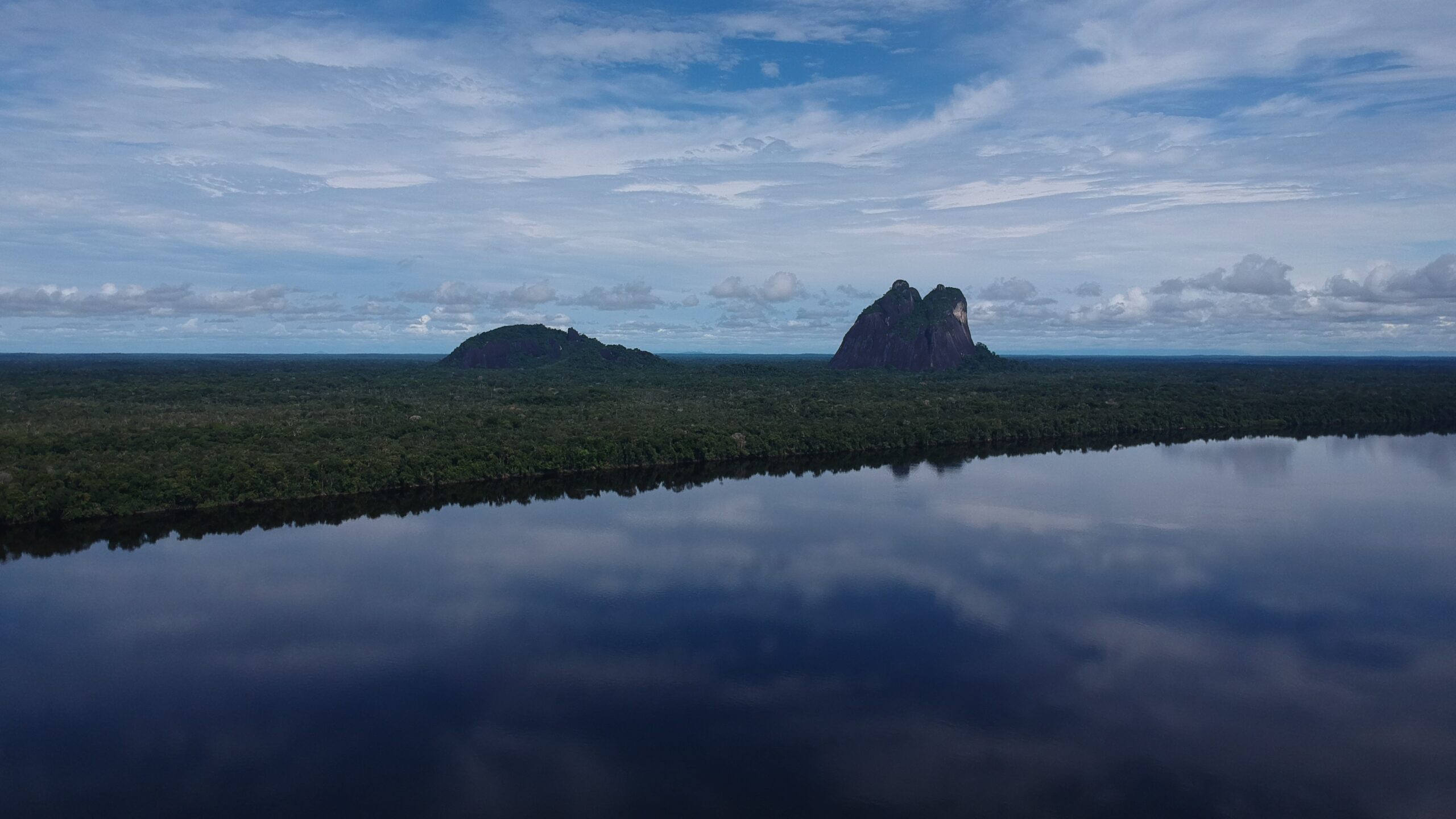
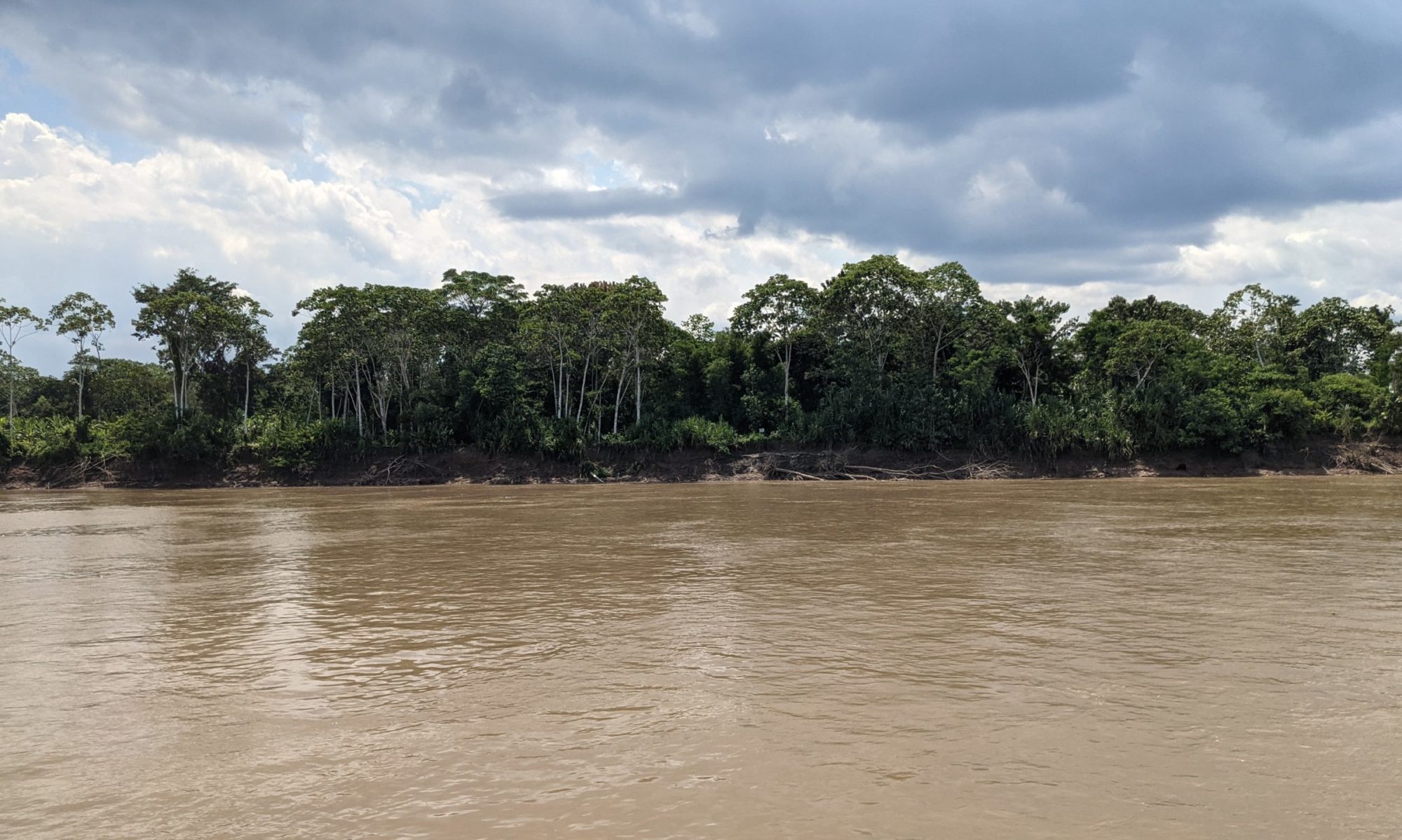
This change alone has resulted in an increase in spawning throughout the fishroom. Some notable spawnings of our wild fish include Apistogramma agassizii, Apistogramma cacatuoides, Apistogramma flabellicauda, Apistogramma sp. “D37”, and what appears to be the true Aequidens diadema. A. diadema was described from the upper Rio Negro and the Casiquiare Canal. We found what appears to be A. diadema on our most recent trip this past February just south of San Felipe, Colombia. We were staying at a local village and did some night fishing in a creek and marsh area just behind where we were staying. It was full of fish including Laetacara fulvipinnis, Nannostomus eques, N. unifasciatus, Paracheirodon axelrodi, Satanoperca jurupari, Acaronia nassa, Apistogramma cf. flabellicauda and the Aequidens diadema.
It is worth noting that a lot of the fish in the upper Rio Negro can also be found in the upper Orinoco region, in particular the Rio Atabapo. Both rivers are black water. Finding similar species makes a lot of sense as the conditions are similar in each river and both are in close proximity to one another. A. diadema from the region appears to be coming in under the name of Aequidens superomaculatum, a similar but different species. The fish we collected were right around 2″ in size when we brought them home. They were quite hardy and survived the export process from Colombia to the U.S.
Since returning, the fish have grown from 2″ to up to 5.5″ for the males. Last week, a pair spawned on an Indian almond leaf (Catappa leaf). A few days later, the parents chewed the fry out of the eggs which was a total surprise. We later found both parents mouthbrooding confirming this species as a delayed mouthbrooder. Due to the tank being a community of cichlid and plecos, we needed to pull the fry. They are now safely in a 20 high and feeding on various small frozen and live foods. Fingers crossed that we can offer this species sometime next year!
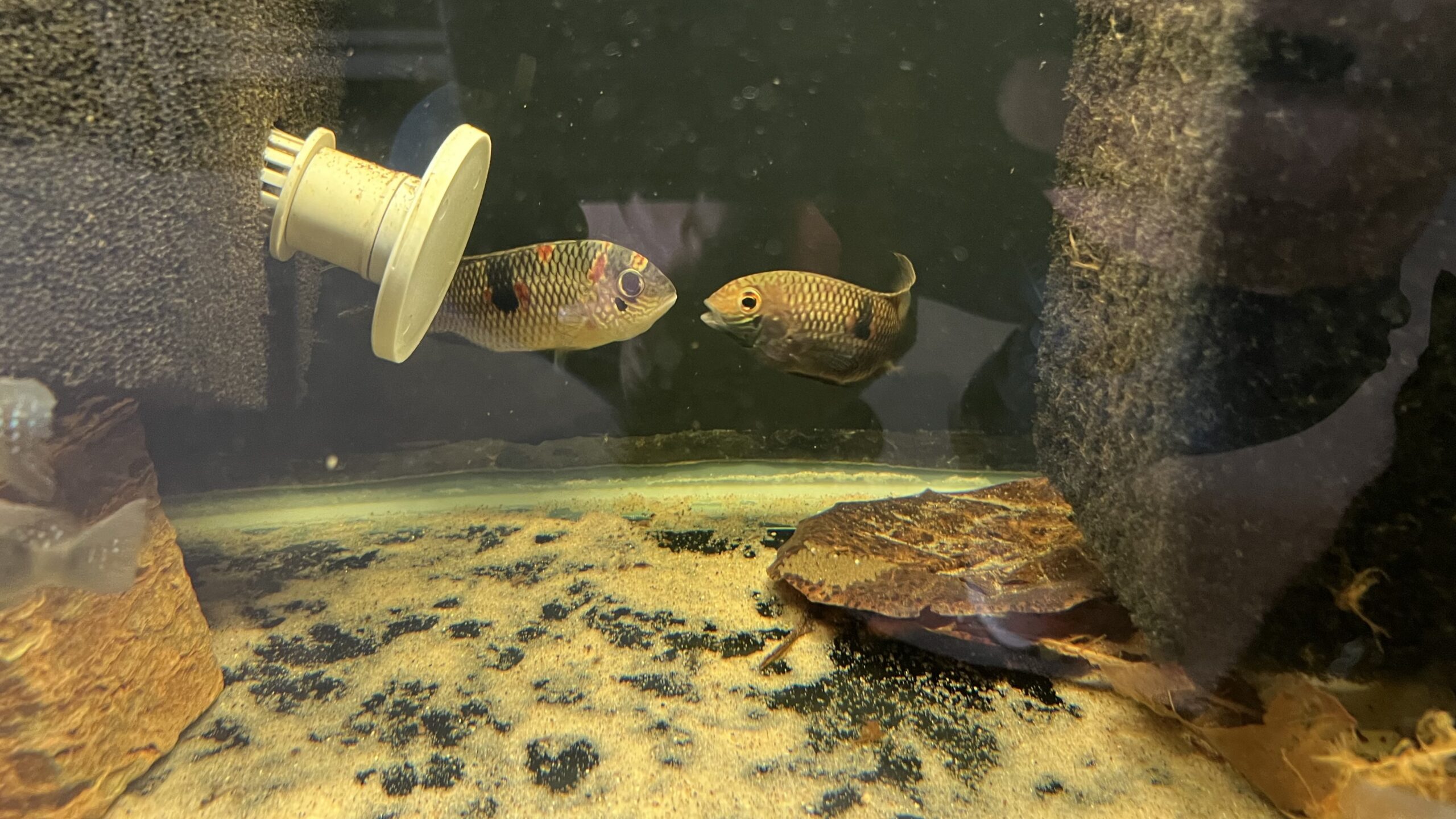
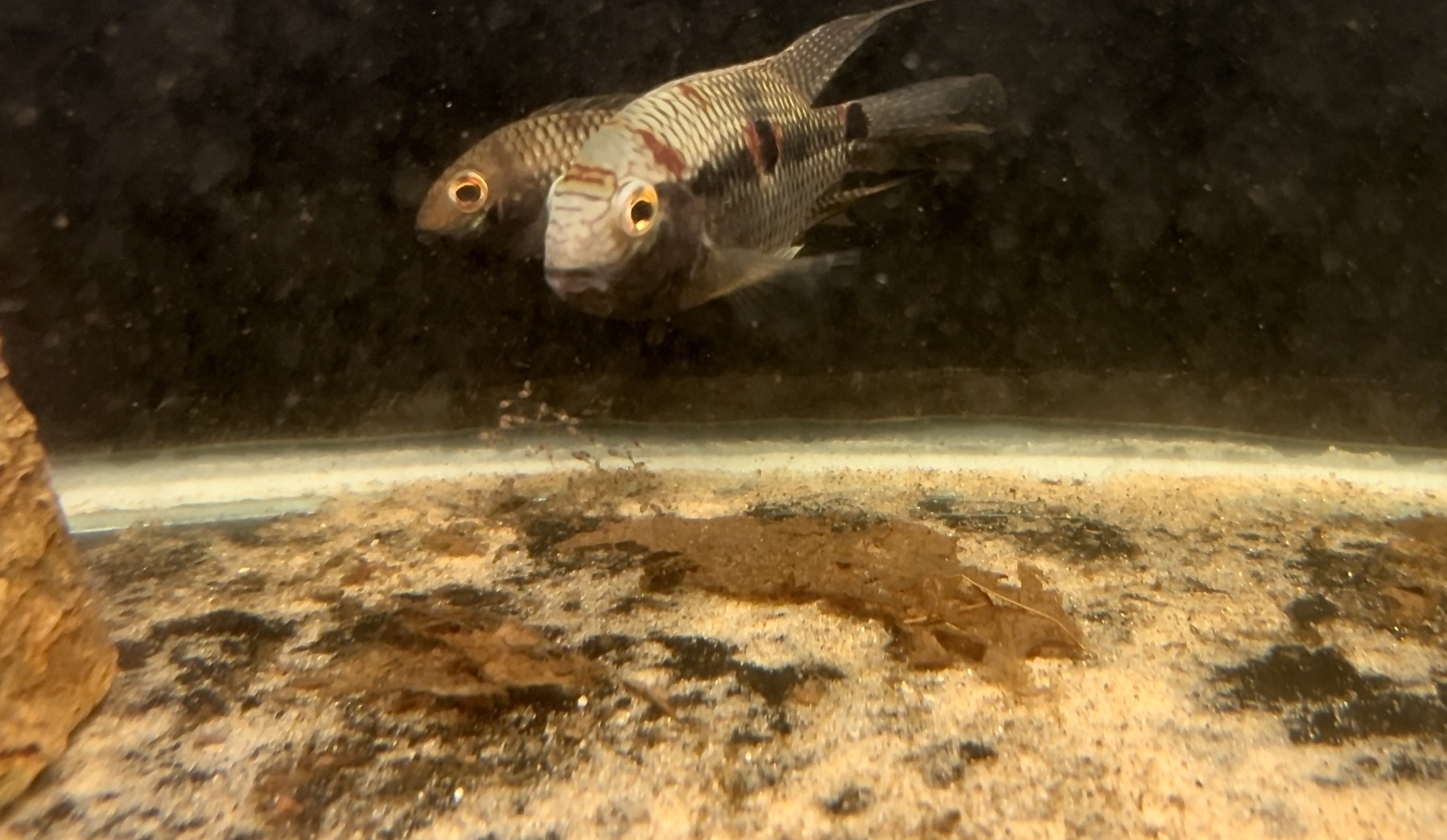
Video Aequidens diadema pair with fry
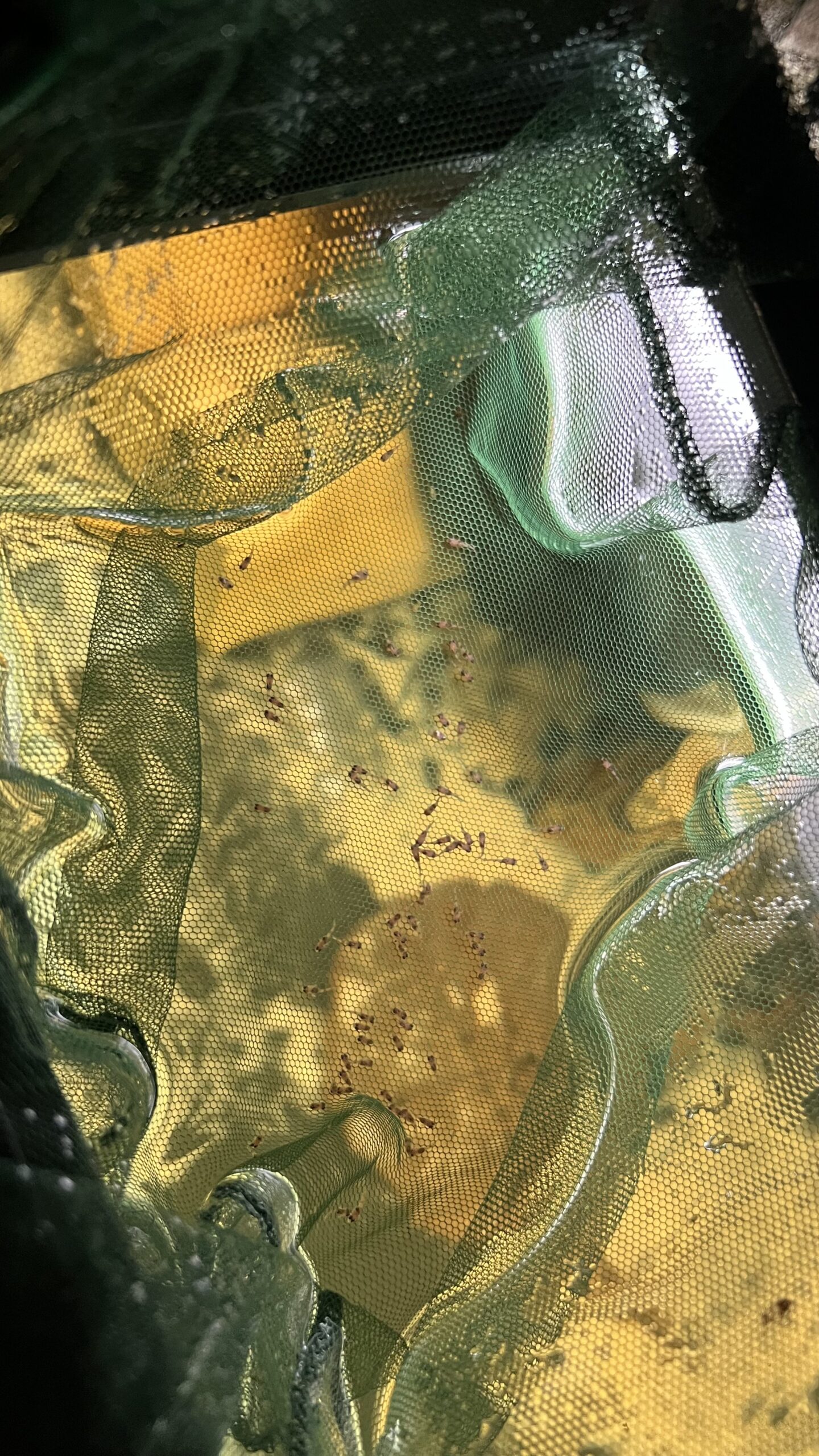
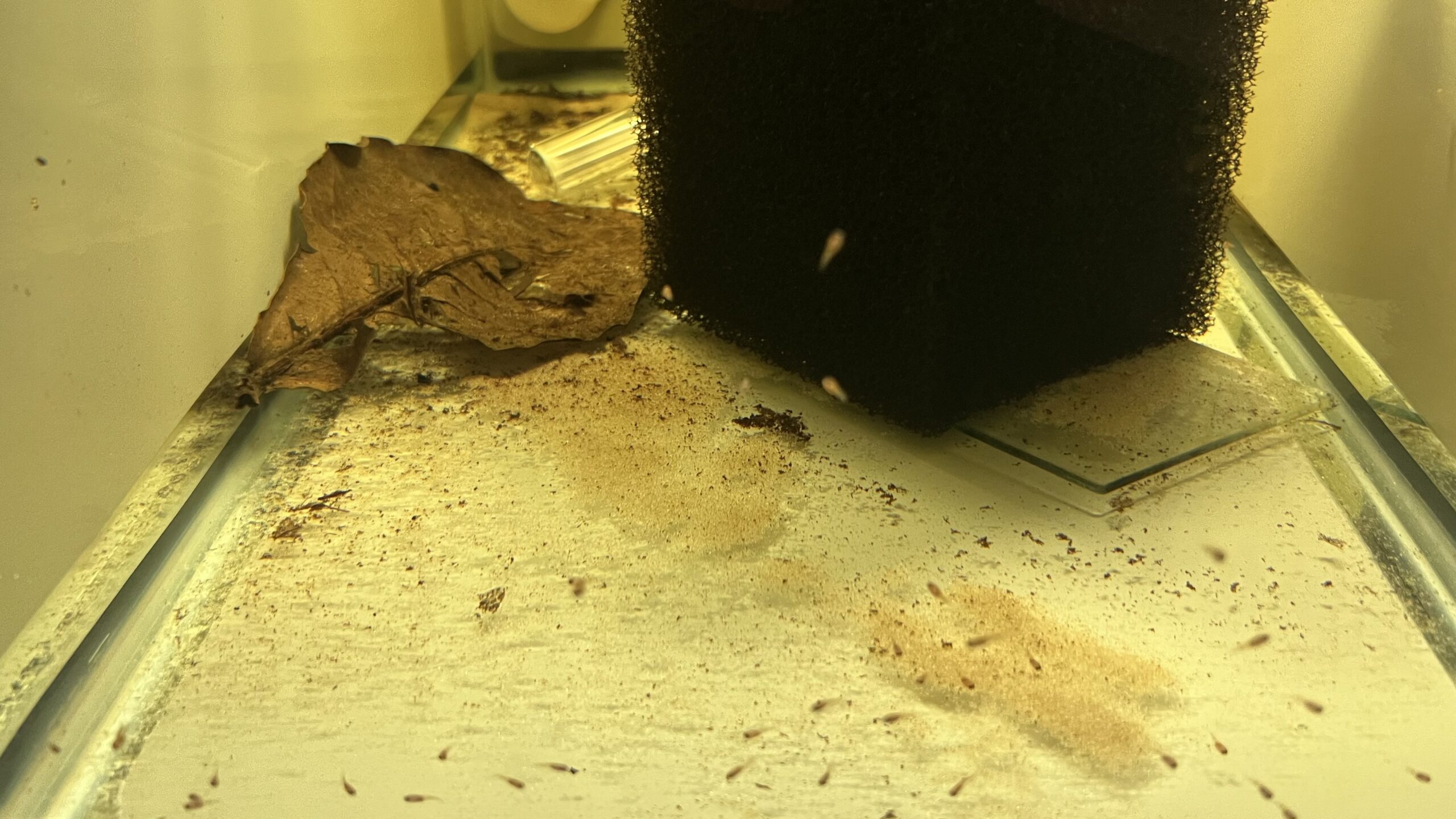
Video A. diadema fry feeding in 20 gallon high
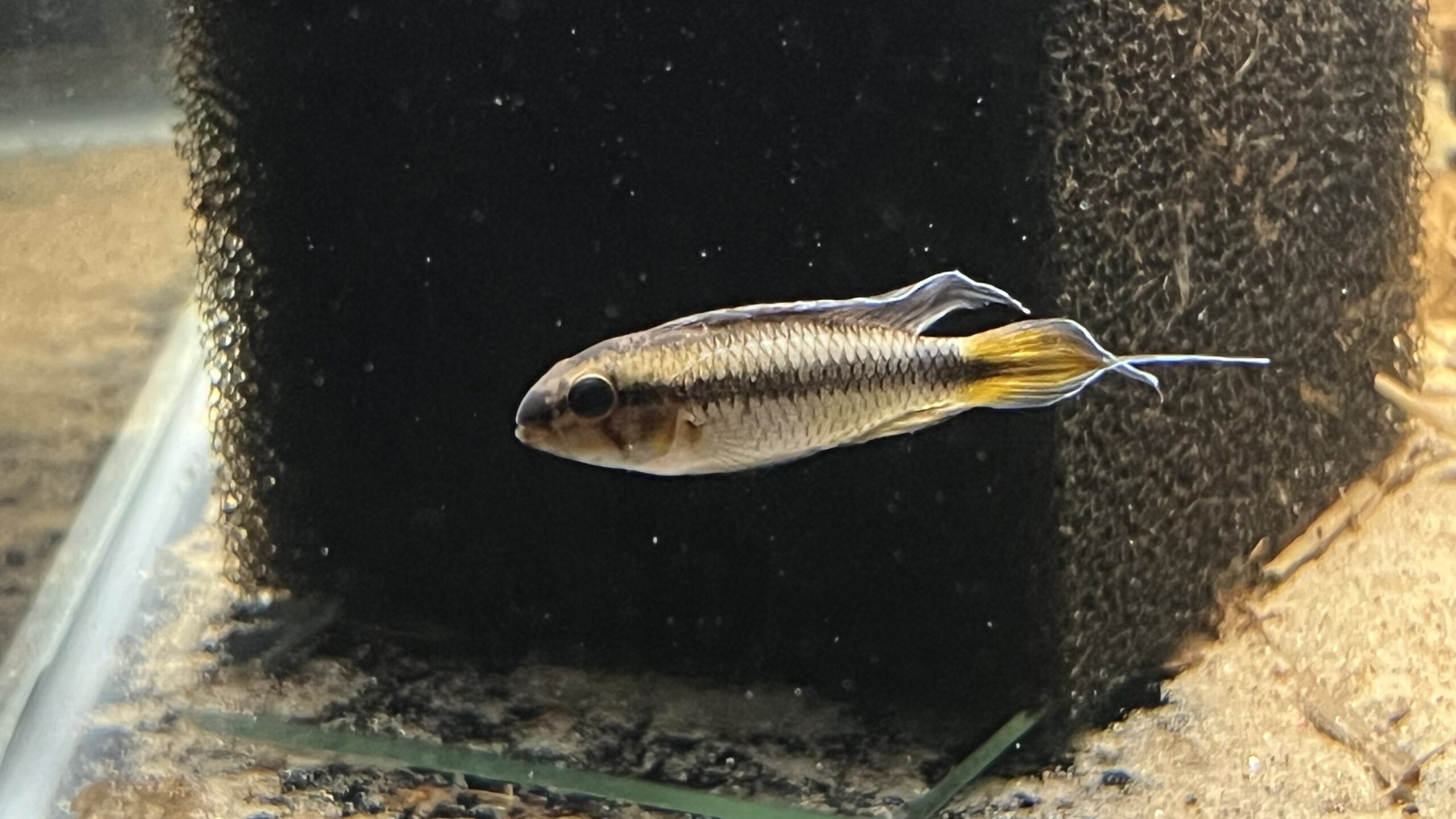
Video of Apistogramma cf. flabellicauda male with fantastic finnage